



Other Recent Articles


Most Popular Content

FROM THE PHOTOJOURNAL

Keeping an eye on the money
Gathering storms
Gothic Bagan
IMG_8529
Cappadocia tree
I never inhaled

Featured Work, Libya, Sovereign Wealth Funds - Apr 1, 2013 23:23 - 0 Comments

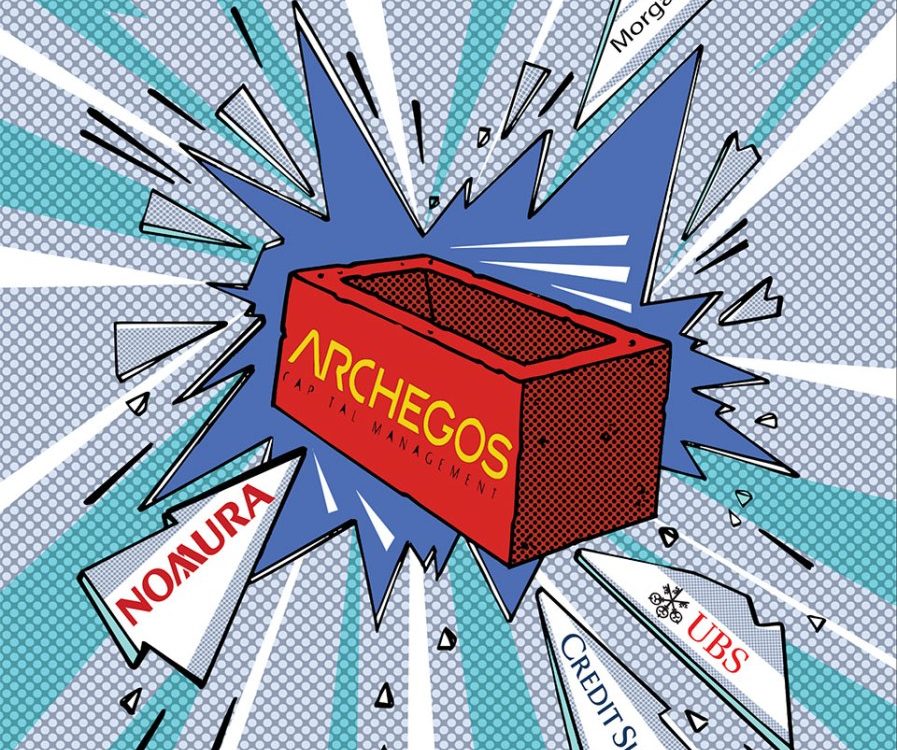
The battle for the Libyan Investment Authority

Euromoney, April 2012Nic6020924

You are a country emerging from a bloody revolution that has ended 42 years of stultifying dictatorship, and you have one crown jewel: a sovereign wealth fund, fed with national oil wealth, with perhaps $60 billion of assets. So where do you go, in these liberated but uncertain times, to find the right man to run it? In Libya in 2011 you went, it turned out, to the University of Nottingham Business School.

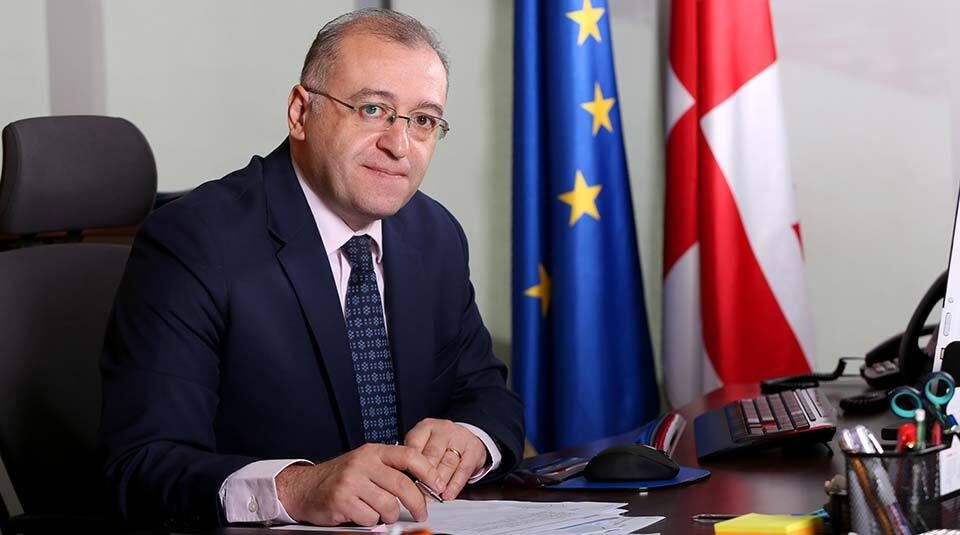
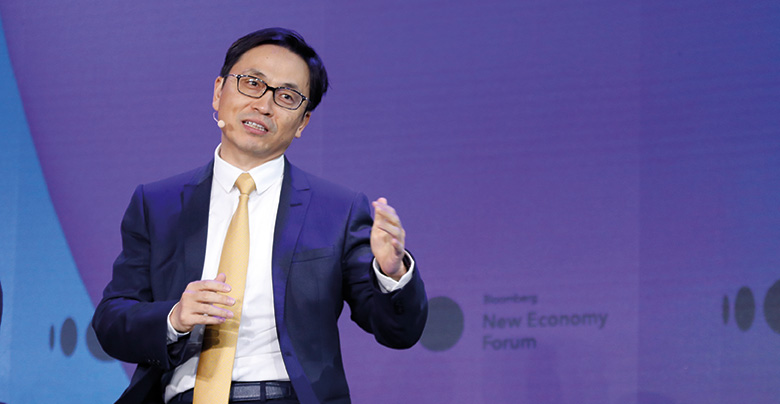
Mohsen Derregia became chairman of the Libyan Investment Authority in April 2012 following a process he describes today as “totally a freak accident.” Indeed, the appointment of an academic, who had left Libya to become a research fellow at Manchester Business School in 2001 before shifting to Nottingham in 2006, puzzled some in the MENA investment community, and continues to do so today. “He’s a professor of accounting,” says someone formerly close to the LIA. “He hasn’t got a clue about finance.” But those who knew him before his move to the UK recall instead a successful entrepreneur in Libya, and not such a strange choice: no investment expert, sure, but a safe custodian for a vital institution.

“A friend of mine called and said: we like your CV. We’re asking for people in senior positions in Libya, and we want some new people to join,” Derregia tells Euromoney from Tripoli. After some cajoling, and on the condition that he would only consider supervisory part-time roles, he expressed interest. First he was proposed as a trustee member on the LIA’s supervisory board; then Libya’s cabinet insisted he would be more useful as a director, involved in LIA’s management. Next he ended up on a committee of three executive directors with the power of a board. “And then people started withdrawing, having seen the amount of work required,” he says. “I ended up being the only remaining person on this committee of three. “ And hence, in April 2012, he became chairman of the LIA, almost by default, and then CEO in May. “I remember the Prime Minister calling me,” he says. “He said: it’s down to you. We can’t all walk away. Somebody has to take responsibility. Somebody has got to do this in the new Libya.”

Continue…

More In Featured Work


Africa general, Big Interviews, Science and engineering - Dec 1, 2012 6:12 - 0 Comments

Photography on the front line: Finbarr O’Reilly interview

Discovery Channel Magazine, December 2012

Finbarr O’Reilly has covered wars, revolutions, famines and the like in some of the most hostile parts of the world – most thoroughly in the Congo but also Afghanistan, Rwanda, Chad, Sudan, Lebanon and Libya, among many others. He was the 2006 winner of the coveted World Press Photo award for a shot taken for Reuters in a refugee camp in Niger, and has won numerous other industry titles. Normally based in Dakar, Senegal, today he is a Nieman Fellow at Harvard University, and spoke to Discovery Channel Magazine from there.

What are the logistical challenges involved in combat photography?

In Africa, about 95% of my job is logistics, chiefly getting to places. The areas are remote and difficult to get around, the languages are different, you need to rent cars or hitch lifts on aid trucks going into the bush, you have to get local translators, you are negotiating with hostile militias or with government troops who don’t want you in certain areas – these things take the bulk of your time. Even flying: Dakar, where I live, to Liberia, should be two hours as the crow flies, but it takes 21 hours because African airlines don’t fly direct and they’re always delayed. Logistics is the biggest part of what we do as photographers in Africa.

How do you begin to capture a conflict on camera?

You have your local resources on the ground, our local reps who know the area who can guide us and direct us on local knowledge to navigate these places. Or we may rely on the UN networks. Then there’s experience: if it’s a zone of conflict you will have your contacts with the government side and the rebel side so you can negotiate your passage through things. It’s not always easy to do; people don’t want you in places where things are happening. You have to assess the risk as you travel. These are all things you get used to doing – I wouldn’t say it’s routine, but you do become accustomed to working in these situations.

Technically, what sort of picture works best to illustrate a conflict?

It depends on what you are going for. If you want an immediate hard news picture that shows what happened that day, you need something dramatic and full of action that captures the moment and could only be taken that day at that time. That’s what the newspapers usually want. What I like to do is more contextual. So when I was in Libya, I was not only traveling with rebels to the front each day, but would sometimes take an afternoon and take portraits of them at their base. There’s no one way to tell a story: there’s the hard news angle, the human angle, and you incorporate all of these to provide the complete picture. But individual images that work are those that have a connection and an impact and drive people to find out more about the context.

To read more of this article, please contact the author or Discovery Channel Magazine

This article appeared in sequence with The History of the Camera

More In Big Interviews


Big Interviews, Economics, Featured Work, Foreign Exchange, From the Vault, Malaysia, Politics - Oct 1, 2007 9:52 - 0 Comments

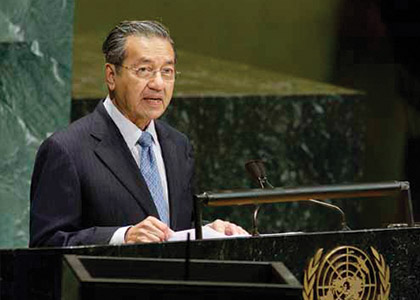
Mahathir Mohamed, Emerging Markets, October 2007

With MahathirEmerging Markets, October 2007

Putrajaya is a curious place. Though few outside of Malaysia have heard of it, it is the country’s federal administrative centre, founded in 1995 to take the government departments out of nearby Kuala Lumpur. It’s a place of resplendent architectural daring: mosques, palaces, convention centres, and five extraordinary bridges over a 650-hectare man-made lake. But the most striking thing about it is this: there’s no-one there.

Continue…

More In From the Vault